Rebuilding the Perkins on a mooring
Seawater hydrolocked Fika's Perkins 4.236. Several months later it's rebuilt and running, all of it done aboard on the mooring, with the main boom as our crane.
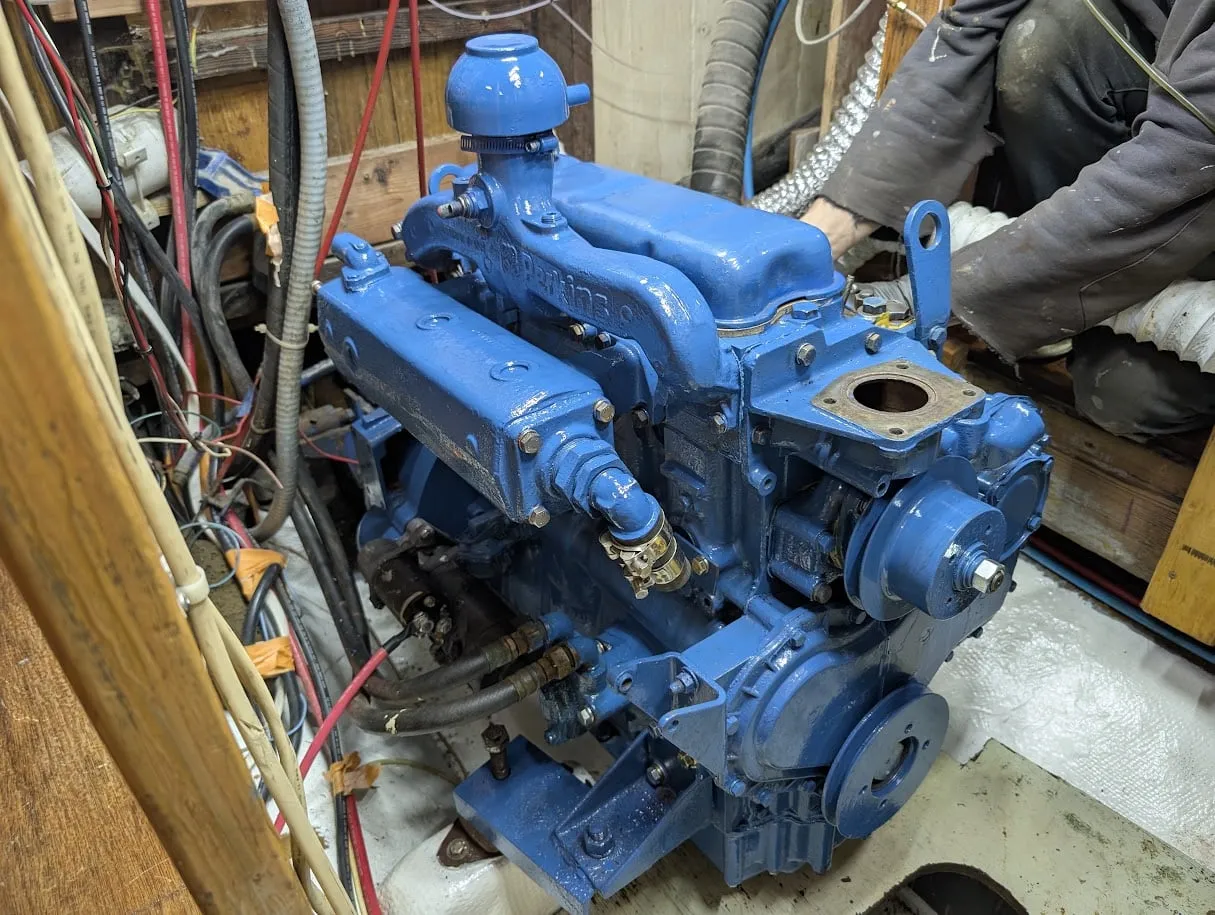
The rebuild of Fika’s Perkins 4.236 diesel is finished. It took several months, and every bit of it happened aboard while she sat on her mooring.
What went wrong
The engine had hydrolocked. Seawater leaked back into it through a poorly designed exhaust system and filled the cylinders. A diesel can’t compress water, so a cylinder full of it stops the engine cold, and seawater sitting inside an engine doesn’t stay harmless for long.
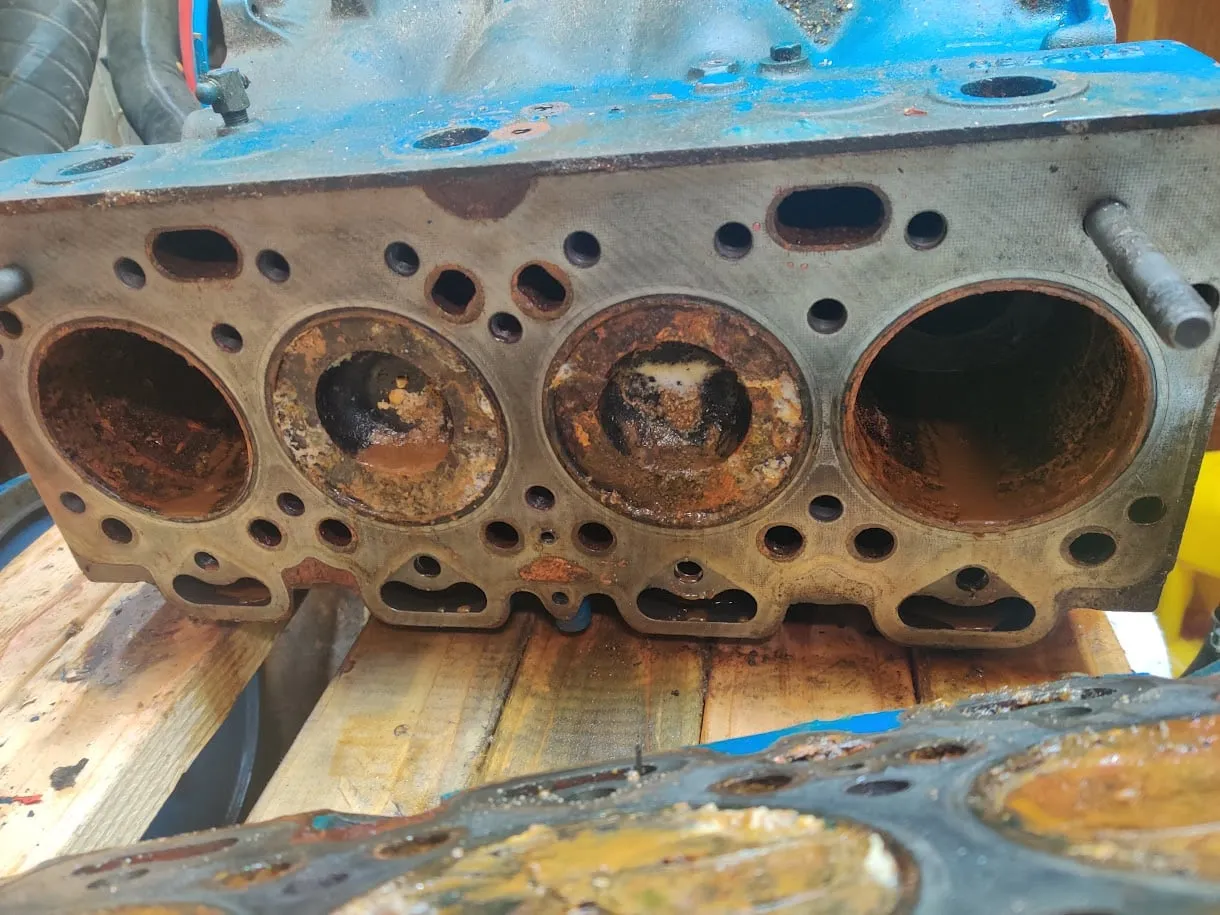
Tearing it down in the engine room
Fika’s engine room isn’t built for this kind of job, and a mooring has no shop crane. I took the engine apart where it sat, then used a come-along to lift it off its mounts.
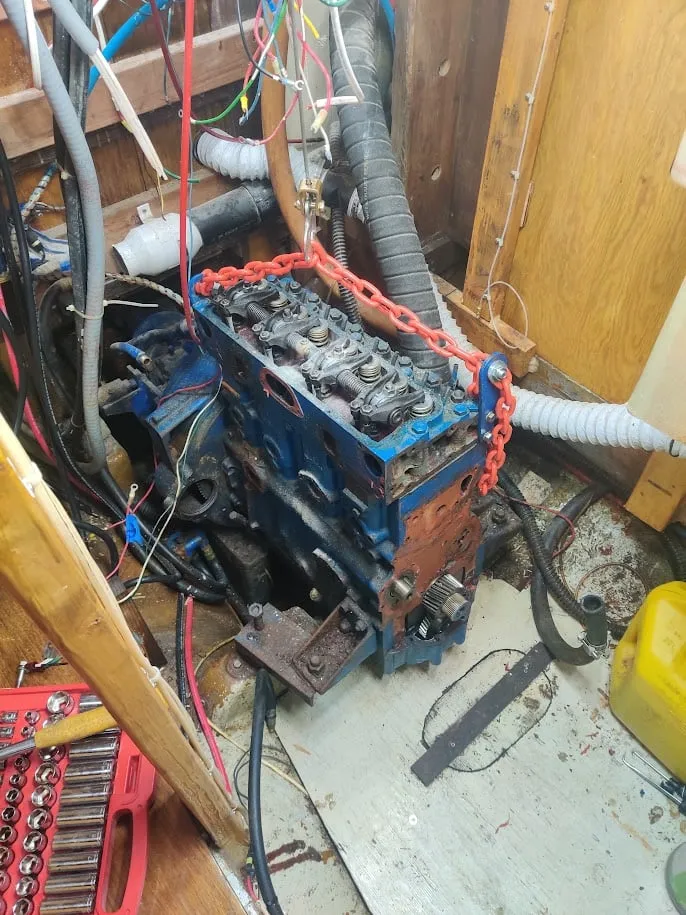
Getting a block off a boat on a mooring
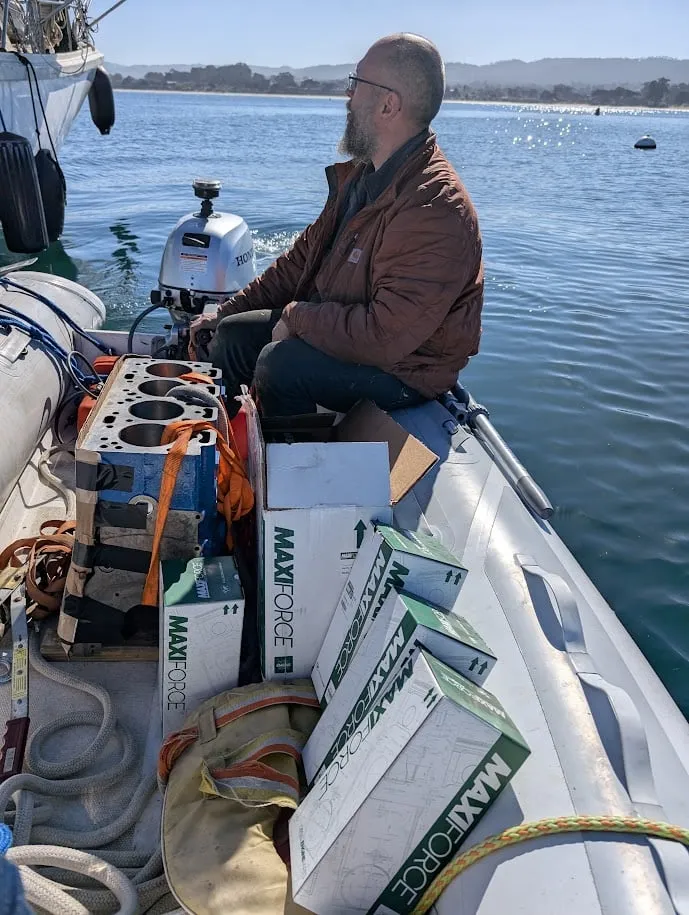
The block and the head both had to go ashore to be machined. That work went to Marino’s Automotive Machine Shop in Watsonville, who already knew their way around a Perkins 4.236 and did a great job for a fair price.
From the engine room I worked the engine around to the companionway. From there, the main boom became the crane: rigged as the hoisting point, it lifted the block up out of the cabin and lowered it into the tender.
Then it all happened again in reverse when the machined parts came back.
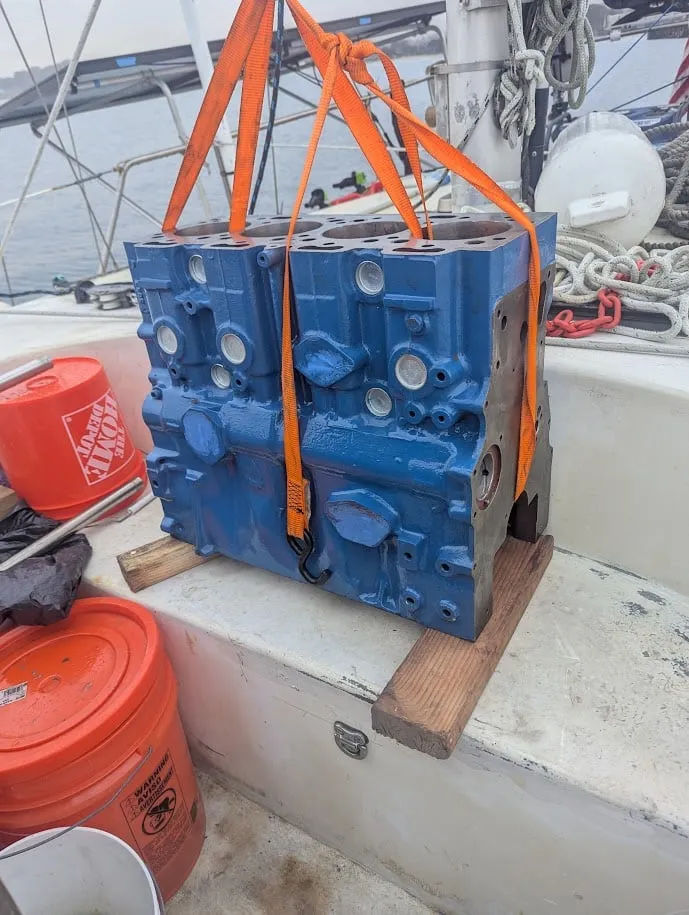
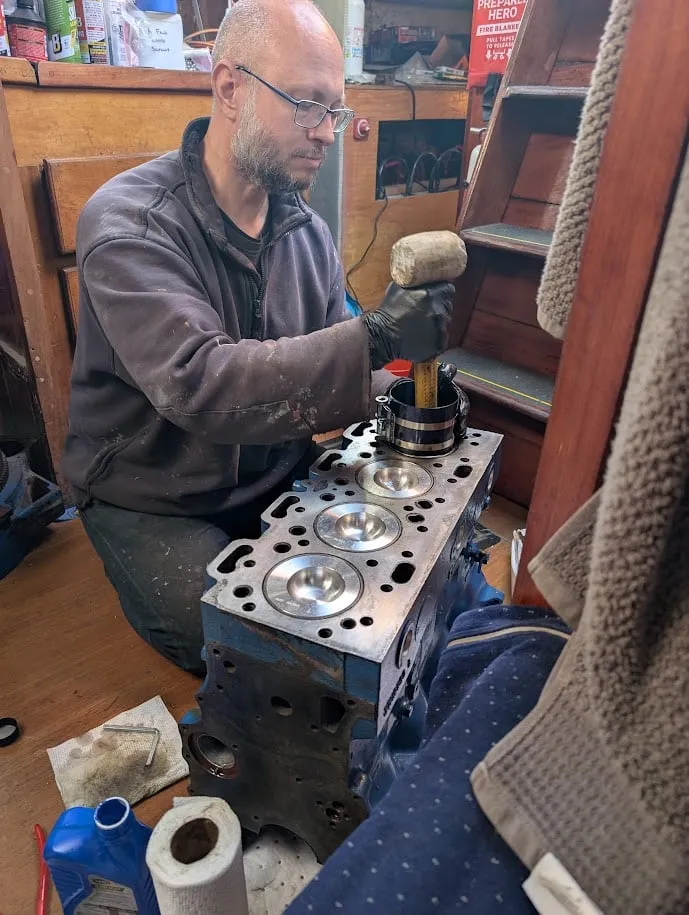
With the machined block back aboard, I put the engine back together right there in the cabin.
Fixing the cause
Rebuilding the engine would mean nothing if the exhaust could flood it again, so the exhaust got redesigned too:
- The old mild steel exhaust components are gone, replaced with fiberglass sections that won’t rust through.
- A properly installed water lift (waterlock) now catches the water in the exhaust so it can’t run back toward the engine.
- A vented loop sits in the raw water line before it joins the exhaust at the mixing elbow. It breaks the siphon that can otherwise pull seawater into the engine while it’s shut down.
Done
The Perkins is back together, back on its mounts, and runs well. It still needs more hours on it, but other projects have taken priority for now.